Clipboard SVG Bundle
First Impressions: Clean, Functional, and Quietly Charming
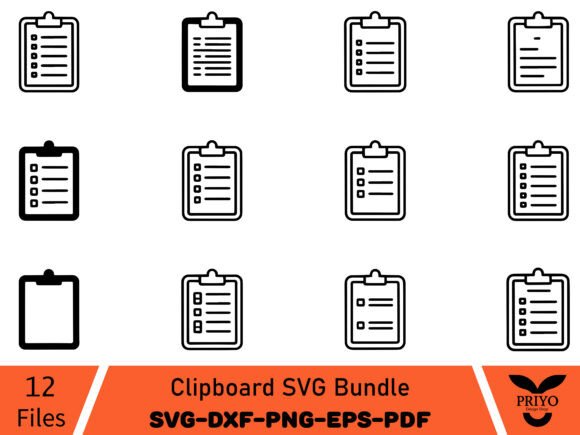
Opening the Clipboard SVG Bundle feels like flipping through a well-organized design journal—no flash, no clutter, just confident line work and intentional negative space. It’s not a loud motif; it’s a quiet, thoughtful illustration that leans into utility as elegance. The clipboard shape is instantly legible, with subtle details—a clipped corner, clean edges, maybe a faint paper outline or minimalist clip shadow—that suggest craftsmanship without overcomplicating the form. As an embroidery designer, I immediately read this as a “supporting player” design: one that adds polish to a handmade product without demanding center stage.
A Real-World Test: Embroidering a Boutique Tote Bag
Last week, I used Clipboard SVG Bundle on a natural canvas tote for a local café’s staff gift set—custom embroidered with names and small icons beside the clipboard. The result? Crisp, balanced, and unmistakably handmade—not machine-perfect, but intentionally warm. Because the design avoids tight curls, fine serifs, or micro-details, it stitched cleanly across three fabric types: medium-weight cotton canvas, linen-blend twill, and even a slightly napped organic cotton. No skipped stitches. No thread nesting in corners. That’s rare for an illustration-based embroidery file—and it speaks directly to how thoughtfully this was built for real-world execution.
Where It Shines (and Where It Asks for Care)
The Clipboard SVG Bundle works especially well for:
- Custom apparel—especially on sweatshirt sleeves, chest pockets, or back yokes where clarity matters more than complexity;
- Embroidered patches—its defined outer shape makes it ideal for cut-and-sew applique or iron-on backing;
- Baby embroidery—think onesies or burp cloths where soft lines and low stitch density keep things gentle and wash-safe;
- Holiday or wedding gifts—pair it with monograms or tiny seasonal accents (a sprig of holly, a single wax seal) without visual competition;
- Small shop product branding—it reads well at 2.5"–3.5", making it perfect for boutique tags, packaging seals, or tea towel hems.
But let’s be direct: this isn’t a one-size-fits-all embroidery file. Use it carefully on:
- Stretchy fabric—like jersey or ribbed knits—without proper cutaway stabilizer and reduced top tension;
- Dark fabric—unless you’ve tested thread color contrast thoroughly; light grays or creams can disappear on charcoal or navy;
- Tiny hoop sizes (under 3")—some versions may compress detail too far, blurring the clip’s definition;
- Curved surfaces like caps—where the flat geometry of the clipboard can distort if hooping isn’t precise;
- Frequent-wash items—verify stitch density before using on kitchen towels or baby blankets; overly dense fill areas may stiffen or crack over time.
How It Shapes Perception—Beyond Just Stitching
What surprises me most about Clipboard SVG Bundle isn’t just how it stitches—it’s how it elevates the finished product’s perceived value. On a plain apron? It signals intentionality—not “I slapped something on.” On a personalized gift? It quietly reinforces care and attention to detail. Customers don’t say, “Oh, that’s a nice clipboard,” but they *feel* the difference between generic clipart and a considered design asset. That matters for Etsy sellers and craft fair vendors: trust builds when your embroidery looks professionally curated, not assembled.
For small business owners building brand consistency, this design plays well alongside custom fonts or simple icons—it doesn’t clash, doesn’t overwhelm, and scales gracefully across digital mockups and physical products. And because it lives comfortably in both Illustrations and Graphics categories, it bridges print and stitch workflows seamlessly: same file, different use case.
Practical Designer Notes Before You Stitch
Before committing to a client project or batch production, here’s what I always do with a new embroidery file like Clipboard SVG Bundle:
- Run a test stitch on scrap fabric—same type, same stabilizer, same thread colors you’ll use;
- Check stitch density visually: does the fill look even? Does the satin stitch wrap smoothly around the clip curve?
- Review small details under magnification—especially where the clip meets the board—to ensure no gaps or floating threads;
- Mock it up in black and white first—this reveals contrast issues faster than color previews;
- Compare performance on light vs. dark fabric backgrounds; sometimes a neutral gray thread reads better than pure white on ecru canvas;
- Confirm your hoop size matches the design’s recommended dimensions—or adjust scaling *before* digitizing further;
- Verify licensing terms: since Clipboard SVG Bundle is marketed for commercial use (“many other tasks, whether…”), double-check whether resale of finished embroidered items or digital redistribution is permitted;
- Always pair it with the right stabilizer—especially for textured fabrics like terry cloth or bouclé, where the clean lines need extra support to stay crisp.
Final Thought: A Design That Earns Its Place
Clipboard SVG Bundle won’t go viral. It won’t dominate Pinterest boards. But it will hold up—on a child’s backpack, a therapist’s office pillow cover, a teacher’s tote, a wedding planner’s notebook sleeve—quietly reinforcing quality, clarity, and calm professionalism. For embroidery designers and creative entrepreneurs who value reliability over novelty, this isn’t just another digital embroidery file. It’s a trusted tool—one that makes every handmade product feel just a little more intentional, and every customer interaction just a little more grounded.