Flying Dove with Olive Branch SVG
A Calm, Timeless Shape That Lands Gently on Fabric
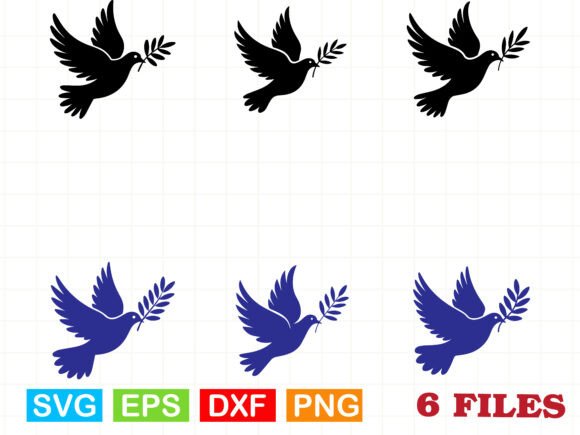
First glance at the Flying Dove with Olive Branch SVG tells you it’s not shouting—it’s settling in. The silhouette is clean but not sterile: wings angled mid-glide, head lifted just enough to suggest quiet purpose, and that slender olive branch held lightly in the beak. It reads as peaceful without slipping into cliché, symbolic without feeling stiff or overly formal. As an embroidery designer who’s stitched hundreds of doves—from wedding monograms to baby onesies—I appreciate how this version avoids over-detailing. There’s no fussy feather layering or intricate eye work—just confident, flowing lines that translate well into stitch.
Where This Design Earns Its Keep: Real Projects, Real Reactions
Last week, I used the Flying Dove with Olive Branch SVG to embroider a set of linen tea towels for a local boutique’s spring launch. We chose a soft sage thread on natural unbleached linen—no contrast drama, just harmony. Customers paused at the rack. Not because it was flashy, but because it felt *intentional*. That’s the quiet strength of this design: it supports the product instead of competing with it. It works equally well on a lightweight cotton baby onesie (stitched with gentle fill stitch and light stabilizer), a structured canvas tote bag (where the wing span fills space without crowding), or a relaxed-fit sweatshirt cuff (scaled down to 3.2" wide, still legible and graceful).
I also tested it as a small embroidered patch—hooped on tear-away + cut-away combo, stitched on twill backing. The curve of the wing held up cleanly; the branch tip didn’t ghost or blur. No satin stitch traps or thread nests appeared, even at moderate density. That tells me the vector foundation is sound—not rushed, not oversimplified.
Use With Care: When Simplicity Needs Strategy
This isn’t a one-size-fits-all embroidery file. On stretchy fabric like jersey or ribbed knit, the clean lines can distort if hooping isn’t precise or stabilizer isn’t layered thoughtfully. I’d avoid placing it directly over seams or curved areas like cap fronts unless you’re willing to digitize minor adjustments—or test first on a scrap with identical tension and stitch speed.
On dark fabric, especially black or navy, make sure your thread color lifts the shape without washing it out. A heather gray or oatmeal thread reads beautifully on charcoal, but white can look brittle. And while the design avoids tiny interior details, the narrow gap between wing and body is best kept above 0.12" in final stitch size—if you shrink it too far for a 2" hoop, that space may close or stitch unevenly.
- Not ideal for ultra-thin silk or chiffon without heavy underlay and reduced density
- Proceed cautiously on textured terry cloth or bouclé—test stitch density and stabilizer weight first
- Avoid dense fill-heavy versions unless your machine handles long runs smoothly
- For holiday embroidery or wedding gifts, pair it with subtle running-stitch borders—not extra flourishes—let the dove breathe
What It Adds to Your Finished Product—and Your Reputation
Embroidery isn’t just decoration—it’s a signal. A clear, balanced Flying Dove with Olive Branch SVG says “thoughtful craftsmanship,” not “quick digital clipart.” Customers notice when stitching lies flat, when corners are crisp, when proportions feel right. That perception lifts perceived value: a $28 embroidered pillow cover feels like a keepsake, not a craft fair impulse buy. For Etsy sellers and small shop owners, that trust compounds. Repeat buyers remember how your dove looked on their baby blanket—and come back for matching nursery wall art or milestone onesies.
It also plays well across branding. Whether you’re building a line of mindful home goods, a boutique maternity collection, or custom condolence gifts, this design carries consistent tone—gentle authority, quiet hope—without locking you into one season or occasion.
Practical Designer Notes Before You Stitch
Before loading the Flying Dove with Olive Branch SVG into your embroidery software:
- Test on scrap fabric that matches your project’s weight, weave, and stretch
- Check thread color contrast in both natural and artificial light—some creams shift yellow under bulbs
- Review stitch density: lighter fill works better on apparel; denser options suit patches or home decor
- Confirm hoop size compatibility—this design scales well, but don’t assume automatic resizing preserves clarity
- Inspect corners and curves in your preview window—look for abrupt jumps or skipped stitches in tight turns
- Run black-and-white mockups to gauge readability on light vs. dark backgrounds
- Use appropriate stabilizer: cut-away for knits, tear-away for stable wovens, fusible for lightweight linens
- Verify licensing terms—especially if selling finished products or bundling the Flying Dove with Olive Branch SVG as part of a larger digital embroidery file pack
Final Thought: A Design That Serves, Not Shouts
The Flying Dove with Olive Branch SVG won’t win awards for complexity—but it earns respect for reliability. It fits naturally into illustrations for handmade product listings, printable mockups for Etsy sellers, and clean graphics for boutique packaging. It doesn’t demand attention; it earns it through consistency, calm balance, and quiet intention. If your craft business values clarity over clutter, meaning over mass appeal, and thoughtful execution over quick trends, this is one of those rare design assets that grows more useful the longer you keep it in rotation.