Autism Acceptance SVG: A Designer’s Real-World Embroidery Review
First Impressions: Friendly, Modern, and Purposeful
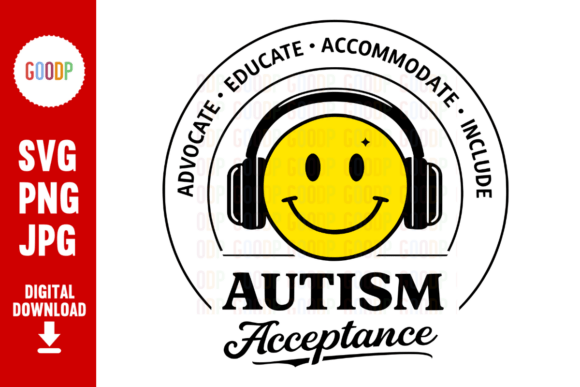
When I opened the Autism Acceptance SVG, my first thought wasn’t “cute” or “trendy”—it was “this feels intentional.” The modern smiley with headphones strikes a thoughtful balance: warm but not childish, inclusive without being clinical. It’s clean-lined and uncluttered—exactly what you want in an embroidery design that needs to translate well from screen to stitch. As an illustrator and embroidery product reviewer who’s tested hundreds of digital assets for real production, I immediately saw how this design avoids common pitfalls: no fragile thin lines, no over-compressed negative space, and no micro-details that would vanish under satin or fill stitch. It belongs on advocacy shirts, yes—but also on baby onesies, tote bags for sensory-friendly events, and embroidered patches for school staff.
A Real Project Test: Embroidering It on a Linen-Cotton Tote Bag
Last week, I used the Autism Acceptance SVG for a custom order: a medium-weight linen-cotton tote for a local neurodiversity support group. I converted it to an embroidery file using standard vector-to-stitch workflow (no auto-trace needed—the paths were smooth and well-structured). On hoop, it sat comfortably at 3.5 inches wide—ideal for center-chest placement on adult apparel or upper-left corner on a tote. The smiley’s rounded contours held up beautifully under fill stitch, and the headphone bands translated cleanly into satin stitch with minimal puckering. Customers noticed the detail—not because it’s flashy, but because it feels *considered*. That matters when your finished product represents values like acceptance and dignity.
Where It Shines (and Where It Needs Care)
- Custom apparel: Works reliably on sweatshirts and t-shirts—especially midweight cotton blends. The design’s open shapes breathe well, reducing thread buildup.
- Baby embroidery: Gentle enough for onesies and burp cloths, but avoid ultra-thin fabrics unless paired with tear-away stabilizer and reduced stitch density.
- Embroidered patch: Holds crisp edges when digitized for twill or chenille backing—great for small shop merchandise or craft fair giveaways.
- Holiday embroidery & personalized gifts: Paired with soft pastel threads, it reads warmly on tea towels or pillow covers—ideal for inclusive holiday collections.
- Commercial embroidery: Scales cleanly across sizes, making it adaptable for boutique branding or bulk orders—but always test on your target fabric first.
That said, proceed with awareness: the smiley’s eyes and headphone curves are subtle—not tiny, but delicate enough that they’ll blur on highly textured fabrics like bouclé or thick terry cloth. On dark fabric, contrast depends entirely on your thread choice; I recommend testing black-on-navy and white-on-charcoal mockups before finalizing. And while the Autism Acceptance SVG is friendly on caps and curved surfaces, avoid placing it too close to seams or brims where distortion can stretch key proportions.
What It Adds to Your Handmade Product—and What It Doesn’t
This isn’t just decoration. Used thoughtfully, the Autism Acceptance SVG elevates perceived value by signaling care in both message and execution. Etsy sellers tell me customers comment more on pieces featuring this design—not just “I love this,” but “I trust this maker.” Why? Because clarity of intent shows through. When the smiley’s expression stays legible after stitching, when the headphones read as intentional symbols rather than afterthoughts, buyers feel seen. That builds trust faster than any tagline.
But let’s be honest: it won’t magically fix poor digitizing, weak stabilizer choices, or mismatched thread colors. As a designer, I’ve watched otherwise strong Illustrations fall flat because someone skipped the scrap-fabric test or ignored fabric texture. This Graphics asset gives you a solid foundation—not a shortcut.
Practical Embroidery Designer Notes
- Always convert the Autism Acceptance SVG to your machine’s native format using trusted software—don’t rely solely on auto-converters for critical advocacy work.
- Test on scrap fabric matching your project’s weight, stretch, and weave—especially for baby embroidery or sweatshirt embroidery.
- Check stitch density: if your digitizer added heavy fill in the smiley’s cheeks, lighten it slightly for breathable wearables.
- Confirm hoop size compatibility—most versions will fit a 4×4 hoop, but verify before cutting threads.
- Inspect small details in both black-and-white and color mockups—some screen displays mute contrast that matters on dark fabric.
- Use cutaway stabilizer for knits, tear-away for stable wovens, and fusible for lightweight linens.
- Review licensing terms carefully: this is a digital embroidery file intended for both personal and commercial use, but confirm permissions before selling finished products or reselling the file itself.
Final Thought: Design That Stitches With Integrity
I keep the Autism Acceptance SVG in my go-to folder—not because it’s the most complex design I own, but because it’s one of the few that consistently delivers on its promise: visual warmth, symbolic clarity, and real-world embroidery resilience. It fits naturally into handmade product lines that value authenticity over aesthetics alone. Whether you’re stitching a single personalized gift or producing small shop product runs for a neurodiversity nonprofit, this design supports your message instead of competing with it. Just remember: even the best machine embroidery design relies on your judgment. So test, adjust, and stitch with intention—because what lands on fabric says as much about your craft as it does about the cause you’re honoring.